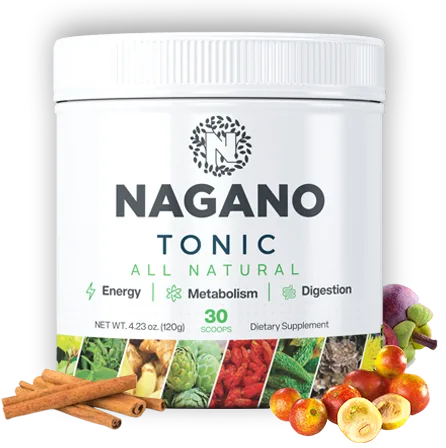
Part of our Nagano Tonic overview.
The Nagano Tonic ingredients list is long, but the label hides almost every dose. Four proprietary blends print only their totals, so nobody outside the company knows how much cinnamon, ginger or green tea is in a scoop. Below we list every line, do the dose arithmetic, and check each herb against the research.
What are the Nagano Tonic ingredients?
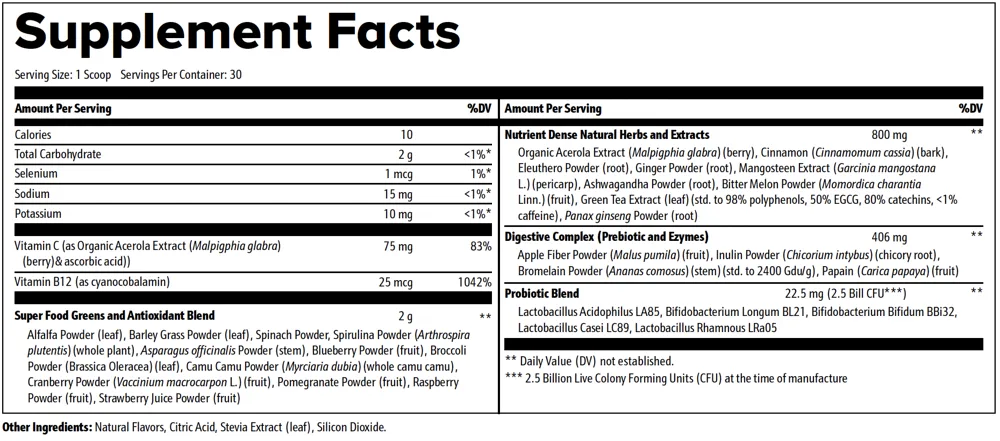
Nagano Tonic is a drink powder with two vitamins, three minerals and four proprietary blends. Per scoop, the label lists a 2 g greens and antioxidant blend, an 800 mg herb blend, a 406 mg digestive complex and a 22.5 mg probiotic blend.[2]
The tub holds 30 scoops, and one scoop has 10 calories and 2 g of carbohydrate. Vitamin C is 75 mg and vitamin B12 is 25 mcg. Other ingredients are natural flavors, citric acid, stevia leaf extract and silicon dioxide.[2]
What does the Nagano Tonic label say, line by line?
The table follows the Supplement Facts panel from top to bottom. Only the vitamins and minerals carry an exact amount. Every blend shows a total and nothing else.
| Label line | Amount per scoop | What is inside | Daily Value |
|---|---|---|---|
| Calories | 10 | Mostly carbohydrate | Not listed |
| Total carbohydrate | 2 g | Not broken down | Under 1% |
| Vitamin C | 75 mg | Organic acerola extract and ascorbic acid | 83% |
| Vitamin B12 | 25 mcg | Cyanocobalamin | 1042% |
| Selenium, sodium, potassium | 1 mcg, 15 mg, 10 mg | Minerals | 1% or less |
| Super Food Greens and Antioxidant Blend | 2 g total | 12 vegetable, grass, algae and fruit powders | Not established |
| Nutrient Dense Natural Herbs and Extracts | 800 mg total | 9 herbs and extracts | Not established |
| Digestive Complex | 406 mg total | Apple fiber, inulin, bromelain, papain | Not established |
| Probiotic Blend | 22.5 mg total | 5 strains, 2.5 billion CFU at manufacture | Not established |
The probiotic count is stated "at the time of manufacture", so the label makes no promise about live cultures when you open the tub.[2] Our how we review supplements method checks label transparency, and Nagano Tonic falls short there because all four blends hide their split.
How much of each herb is in the 800 mg blend?
Nobody outside the company knows, because the label gives one total for nine herbs. Split evenly, each herb would get about 89 mg. The real split may be uneven, but even the best case for any one herb falls short of most study doses.
The test is simple: imagine the whole 800 mg were a single herb, leaving nothing for the other eight. Here is how that impossible best case compares with research doses.
| Herb | Best case if all 800 mg were this herb | Studied daily dose | How the best case compares |
|---|---|---|---|
| Cassia cinnamon | 800 mg | 2 g or more for fat mass[8] | 40% at most |
| Panax ginseng | 800 mg | 2.7 g in one trial[22] | Under a third |
| Ashwagandha | 800 mg | 600 mg or more for sleep[19] | Reachable only if it filled most of the blend |
| Eleuthero | 800 mg | 800 mg, taken alone[24] | Reachable only if it were the whole blend |
| Green tea extract (50% EGCG) | 400 mg EGCG | Safety figure: 704 mg EGCG a day in drinks[6] | Under the safety figure |
At the even split of 89 mg, eleuthero would be about a ninth of its study dose and ashwagandha under a sixth of its own. The label does not say which herb gets the most.
What does each herb in the Nagano Tonic formula do?
None has been shown to cause meaningful weight loss at the amounts this blend can hold. Cinnamon and ginger have the best signals, green tea and bitter melon have weak or null reviews, and the rest were studied for other outcomes.
Green tea extract
Evidence: Weak
The vendor says EGCG has been "used for centuries in Asia".[1] The label says the extract is standardized to 98% polyphenols, 50% EGCG and 80% catechins, with under 1% caffeine.[2]
A Cochrane review called green tea's weight effect "small, statistically non-significant" and "not likely to be clinically important".[5] NCCIH lists rare liver injury, mostly from extract pills, plus nausea, constipation and raised blood pressure.[7]
Cassia cinnamon
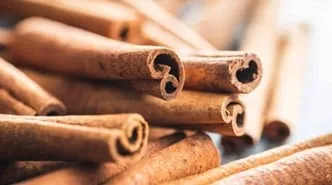
Gram doses: Limited This dose: Weak
The vendor's cinnamon blurb points to healthy blood sugar.[1] It is the strongest weight signal on the label: 12 trials with 786 people found weight down 1.02 kg and waist down 2.40 cm.[8]
The catch is dose. Fat-mass changes appeared at 2 g a day or more for 12 weeks or longer,[8] and the entire herb blend is 800 mg. NCCIH lists stomach upset and allergy, and cassia carries a coumarin and liver caution.[9][10]
Ginger
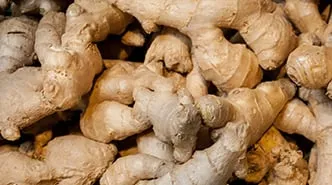
Gram doses: Limited This dose: Weak
The vendor credits ginger with "enhancing thermogenesis".[1] Its ginger-water citation is a rat study.[3]
In people, 14 trials with 473 participants found a small drop in weight (standardized difference -0.66) and better insulin resistance, but no significant change in BMI.[11] NCCIH lists heartburn, abdominal discomfort and diarrhea, and suggests asking a provider during pregnancy.[12]
Bitter melon
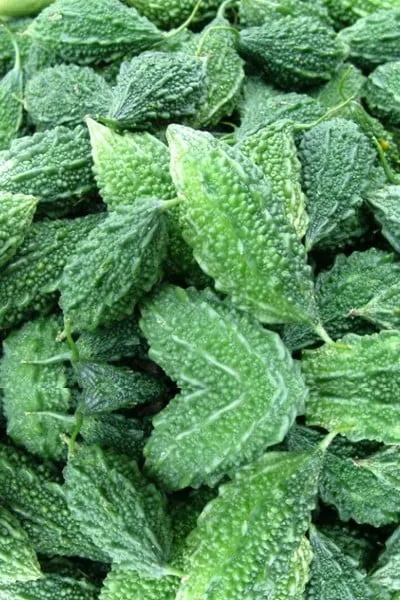
Evidence: Weak
The vendor says bitter melon helps "convert the carbs you eat to energy instead of storing them as fat".[1] Two meta-analyses do not support the weight idea.
One found weight down 1.00 kg, not significant, with very high variation between trials.[13] The other, 10 trials and 448 people, found no significant change in weight, BMI, waist or body fat.[14] MSKCC warns of low blood sugar with insulin or diabetes drugs and advises avoiding it in pregnancy.[15]
Mangosteen pericarp
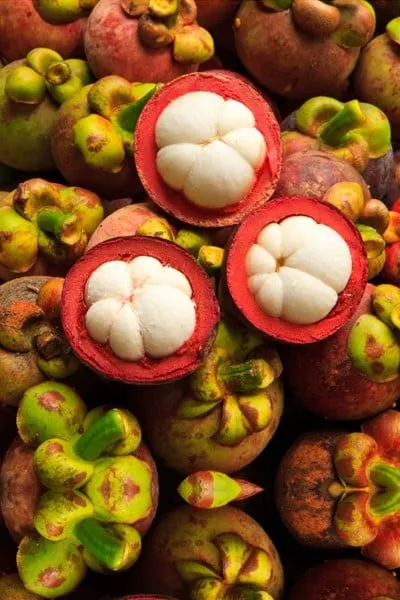
Evidence: Weak
The label lists mangosteen pericarp extract with no strength stated.[2] The main human study is an open pilot of 22 women with obesity and no placebo, where insulin resistance fell 53% versus 15%.[16]
That design cannot separate the extract from other changes. One case of lactic acidosis followed 12 months of mangosteen juice,[17] and MSKCC flags chemotherapy, cyclosporine and tacrolimus.[18]
Eleuthero
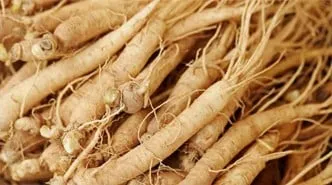
Evidence: Weak
The vendor says eleuthero helps "support cardiac function" and "maintain brain health".[1] We found no weight trial. A 9-person crossover gave 800 mg a day, the size of the whole herb blend, and endurance rose 23%.[24]
MSKCC notes raised digoxin levels and false lab readings, plus a brain bleed case with a multi-herb product.[25]
Ashwagandha
Evidence: Weak at this dose
We found no weight trial for ashwagandha. Its research is on sleep and stress, where the larger effect in 5 trials came at 600 mg a day or more.[19]
NCCIH lists pregnancy, hormone-sensitive prostate cancer, and thyroid or autoimmune disease as reasons for caution.[20] Rare liver injury has also been reported.[21]
Panax ginseng
Evidence: Weak
The vendor says Panax was "used therapeutically for millennia in Japan, East Asia, Korea & China".[1] Tradition is not a trial, and we found no weight evidence. One trial used 2.7 g a day for erectile function, more than three times the whole herb blend.[22] NCCIH lists insomnia, possible lower blood sugar and effects on clotting.[23]
Acerola
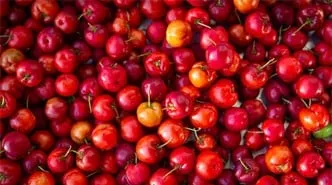
Evidence: Weak (nutrient only)
Acerola appears twice: as a source of the 75 mg of vitamin C, and again inside the herb blend.[2] It has no weight evidence of its own, so its value here is the vitamin C covered below.
What is in the Nagano Tonic greens and antioxidant blend?
Twelve powders share 2 g, about 167 mg each if split evenly: alfalfa, barley grass, spinach, spirulina, asparagus, blueberry, broccoli, camu camu, cranberry, pomegranate, raspberry and strawberry juice powder.[2] These are food powders in small amounts.
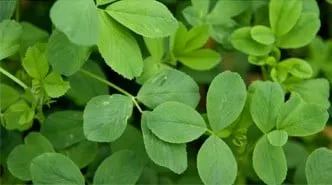
The sales page advertises a "Proprietary Blend of 8 Super Antioxidants", but the label lists 12, adding alfalfa, camu camu, raspberry and strawberry.[1][2]
Camu camu is the only one with a human study in our guide: 1.5 g a day in 30 people cut liver fat 7.43%, against a rise of 8.42% on placebo, with no weight result.[33] Here it shares 2 g with eleven others, and the vendor's camu camu citation is a mouse study.[3]
What do the digestive complex and probiotics add?
Little that research can measure at these amounts. The 406 mg digestive complex holds apple fiber, inulin from chicory root, bromelain (2400 GDU/g) and papain.[2] Fiber trials use grams, and 406 mg is under half a gram for four ingredients.
Inulin results are mixed. A 44-person prediabetes trial saw more weight lost in weeks 9 to 18 (2.3% versus 0.6%),[28] but a review of 33 trials found no effect on body weight.[29] Bromelain and papain have no weight evidence, and NCCIH lists stomach upset and diarrhea for bromelain.[30]
The probiotic blend holds five strains at 2.5 billion CFU at manufacture.[2] Across 15 trials and 957 people, probiotics lowered weight 0.60 kg, and the authors called the effects "small".[31] Effects depend on the strain, and NCCIH flags infection risk for people who are seriously ill or immunocompromised.[32] Our gut health guides cover probiotics and fiber in more depth.
Which vitamins and minerals are in Nagano Tonic?
Only two are present in meaningful amounts: vitamin C at 75 mg (83% DV) and vitamin B12 at 25 mcg (1042% DV). Selenium at 1 mcg, sodium and potassium are trace amounts.[2]
Vitamin C. 75 mg sits far below the adult upper limit of 2,000 mg a day.[26] It has no weight evidence.
Vitamin B12. 1042% of the Daily Value sounds large, but B12 has no upper limit because of its low toxicity. There is no evidence it helps weight or energy in people who are not deficient. Metformin and acid-blocking drugs can lower B12, which is a reason to get tested, not to self-dose.[27]
The vendor says Nagano Tonic "is not a stimulant".[2] With green tea extract under 1% caffeine, the label fits that statement.
Is Nagano Tonic a natural formula or a metabolic reset formula?
Mostly plant powders, but not only. The tub says "ALL NATURAL" and "Energy | Metabolism | Digestion",[1] while the label also lists ascorbic acid, cyanocobalamin, citric acid, silicon dioxide and natural flavors.[2] "All natural" is a marketing phrase, not a safety rating.
The phrase "metabolic reset formula" did not appear on the vendor pages we read. The vendor's own pitch is that the drink "targets a dormant metabolism".[1] No study in our guide tested that idea, and we found no trial of the product. We check each metabolism and craving claim in Nagano Tonic cravings and metabolism.
The vendor also says the powder is "manufactured here in the USA in an FDA-registered facility that follows the GMP (good manufacturing practices) guidelines."[2] FDA registration is not FDA approval, and no facility is named, so we could not verify it.
Are Nagano Tonic's ingredients safe?
Most amounts are small, but several herbs carry cautions that matter more than dose: bitter melon and cinnamon with diabetes drugs, green tea extract and ashwagandha for the liver, eleuthero with digoxin, and several herbs in pregnancy.
| Ingredient | What our sources say | Who should ask a doctor first |
|---|---|---|
| Green tea extract | Rare liver injury; nausea, constipation, raised blood pressure[7] | Liver disease; nadolol, atorvastatin or raloxifene users |
| Bitter melon | Stomach upset; rare heart rhythm, ulcer and kidney case reports[15] | Insulin or diabetes drug users; pregnancy; G6PD deficiency |
| Cassia cinnamon | Stomach upset, allergy; coumarin and liver[9][10] | Liver disease; diabetes drug users |
| Ashwagandha | Rare liver injury[21] | Pregnancy; thyroid or autoimmune disease; sedative, diabetes, blood pressure or thyroid drug users[20] |
| Panax ginseng | Insomnia; blood sugar and clotting effects[23] | Diabetes drug or blood thinner users; pregnancy |
| Eleuthero | Raises digoxin levels[25] | Digoxin users |
| Mangosteen | One lactic acidosis case[17] | Chemotherapy, cyclosporine or tacrolimus users[18] |
| Probiotics | Infection risk in vulnerable groups[32] | Immunocompromised or seriously ill people |
| Inulin, bromelain, papain | Gas, bloating, stomach upset[30] | IBS; pineapple or papaya allergy |
The full list of reactions and drug cautions is in Nagano Tonic side effects.
Do the vendor's references match the Nagano Tonic label?
Only partly. The reference page lists 35 items with no links or PubMed numbers.[3] Some cite ingredients that are not on the label: turmeric on the home page, and seaweed, milk thistle and dandelion on the video page.[1][4]
The ginger citation is a rat study, and the camu camu and eleuthero citations are mouse and cell studies.[3] A reference to an ingredient the tub does not contain says nothing about the tub. We checked each label ingredient on PubMed instead.
Do the ingredients prove Nagano Tonic works?
No. Ingredient studies describe one compound at a known dose. Nagano Tonic combines 30 named actives across four blends at undisclosed doses, and we found no trial of the finished drink.
The best signals, cinnamon at about 1 kg and probiotics at 0.6 kg, came from doses this blend almost certainly does not reach.[8][31] We weigh the whole picture in does Nagano Tonic work.
On October 2, 2026, we read the vendor's label, sales, contact and reference pages from archived copies, because the live site blocked our connection. We checked each study on PubMed and added NCCIH, NIH Office of Dietary Supplements and MSKCC guidance. We received no free product.
What is our take on the Nagano Tonic formula?
A long list of familiar ingredients at doses nobody can check. Publishing every ingredient name is a plus. Hiding every herb amount behind four blends is the main weakness, because it blocks the one comparison that matters most.
Judged by our How We Review method, Nagano Tonic is weakest on evidence and label transparency. Our weight loss drinks guide compares the category, and the Nagano Tonic overview covers price, refunds and the full verdict.
Frequently asked questions
What are the main ingredients in Nagano Tonic?
Nagano Tonic has four proprietary blends: 12 greens and fruit powders in 2 g, nine herbs in 800 mg including green tea extract, cassia cinnamon, ginger and bitter melon, a 406 mg digestive complex, and five probiotic strains. It also adds 75 mg vitamin C and 25 mcg vitamin B12.
How much green tea or cinnamon is in Nagano Tonic?
The label does not say. Both sit inside an 800 mg blend shared by nine herbs, so an even split would be about 89 mg each. Cinnamon's weight effect in trials needed 2 g a day or more, which is more than double the whole blend.
Is the Nagano Tonic formula a proprietary blend?
Yes, almost entirely. All four blends list only a total weight, with no amount for any individual herb, powder or probiotic strain. Only vitamin C, vitamin B12 and three trace minerals carry an exact amount, so the dose of each active herb cannot be checked.
Does Nagano Tonic contain caffeine or gluten?
The green tea extract is standardized to under 1% caffeine, so caffeine should be very low. Gluten content is not stated. The vendor's FAQ says it is barley free, but barley grass powder is on the label, so people with celiac disease should ask first.
Who should avoid the ingredients in Nagano Tonic?
Ask a doctor first if you take insulin or diabetes drugs, digoxin, blood thinners, or nadolol, atorvastatin or raloxifene, or if you have liver disease, thyroid or autoimmune disease, or a weak immune system. Several herbs, including bitter melon and ashwagandha, are not advised in pregnancy.
Sources
- Nagano Tonic home page, archived copy. leanbodytonic.com via Wayback Machine, captured May 5, 2026 (read October 2, 2026).
- Nagano Tonic contact page, FAQ and Supplement Facts, archived copy. leanbodytonic.com via Wayback Machine, captured May 5, 2026 (read October 2, 2026).
- Nagano Tonic references, archived copy. leanbodytonic.com via Wayback Machine, captured November 1, 2025 (read October 2, 2026).
- Nagano Tonic video sales page, archived copy. leanbodytonic.com via Wayback Machine, captured March 30, 2026 (read October 2, 2026).
- Cochrane: green tea for weight loss and maintenance. PubMed abstract (read October 2, 2026).
- Safety assessment of green tea catechins (EGCG intake). PubMed abstract (read October 2, 2026).
- Green Tea. NCCIH, undated (read October 2, 2026).
- Cinnamon and body weight, 12 randomized trials. PubMed abstract (read October 2, 2026).
- Cinnamon. NCCIH, undated (read October 2, 2026).
- Coumarin in cassia cinnamon. PubMed abstract (read October 2, 2026).
- Ginger and body weight, 14 randomized trials. PubMed abstract (read October 2, 2026).
- Ginger. NCCIH, undated (read October 2, 2026).
- Bitter melon and body composition, meta-analysis. PubMed abstract (read October 2, 2026).
- Bitter melon, 10 trials and 448 people. PubMed abstract (read October 2, 2026).
- Bitter Melon. Memorial Sloan Kettering Cancer Center, undated (read October 2, 2026).
- Mangosteen pericarp in 22 women with obesity, pilot. PubMed abstract (read October 2, 2026).
- Lactic acidosis after mangosteen juice, case report. PubMed abstract (read October 2, 2026).
- Mangosteen. Memorial Sloan Kettering Cancer Center, undated (read October 2, 2026).
- Ashwagandha and sleep, 5 trials. PubMed abstract (read October 2, 2026).
- Ashwagandha. NCCIH, March 2023 (read October 2, 2026).
- Liver injury linked to ashwagandha. PubMed abstract (read October 2, 2026).
- Hong: Korean red ginseng trial. PubMed, 2002 (read October 2, 2026).
- Asian Ginseng. NCCIH, undated (read October 2, 2026).
- Eleuthero 800 mg a day and endurance, crossover trial. PubMed abstract (read October 2, 2026).
- Siberian Ginseng. Memorial Sloan Kettering Cancer Center, undated (read October 2, 2026).
- Vitamin C fact sheet. NIH Office of Dietary Supplements, undated (read October 2, 2026).
- Vitamin B12 fact sheet. NIH Office of Dietary Supplements, undated (read October 2, 2026).
- Inulin in 44 adults with prediabetes. PubMed abstract (read October 2, 2026).
- Inulin-type fiber, 33 randomized trials. PubMed abstract (read October 2, 2026).
- Bromelain. NCCIH, undated (read October 2, 2026).
- Probiotics and body weight, 15 randomized trials. PubMed abstract (read October 2, 2026).
- Probiotics: What You Need To Know. NCCIH, undated (read October 2, 2026).
- Camu camu 1.5 g a day, crossover trial. PubMed abstract (read October 2, 2026).
This page is general information, not medical advice. Dietary supplements are not reviewed by the FDA for safety or effectiveness before they are sold and are not intended to diagnose, treat, cure or prevent any disease. Talk to your doctor before taking any supplement, especially if you are pregnant, nursing, take medication or have a health condition.